
 Agentic AI
 Accounts Payable
 Order Management
 Transport & Logistics
 Customs Clearance
 Banking and financial services
 Insurance
 Transport & Logistics


On September 23, the "2026 Rebirth of Financial Value Creation Capability in the AI Era and Launch of the Blue Book on the Application of Agent Technology in Finance" was held in Chengdu. Led by the Intelligent Finance Research Institute and jointly completed over half a year by Shanghai National Accounting Institute, Kingdee Group, Yuannian Technology, i-Search, Yonyou, Inspur Digital Enterprise, Hand Enterprise Solutions, and Jiuqi Software, the Blue Book on the Application of Agent Technology in Finance was officially released.
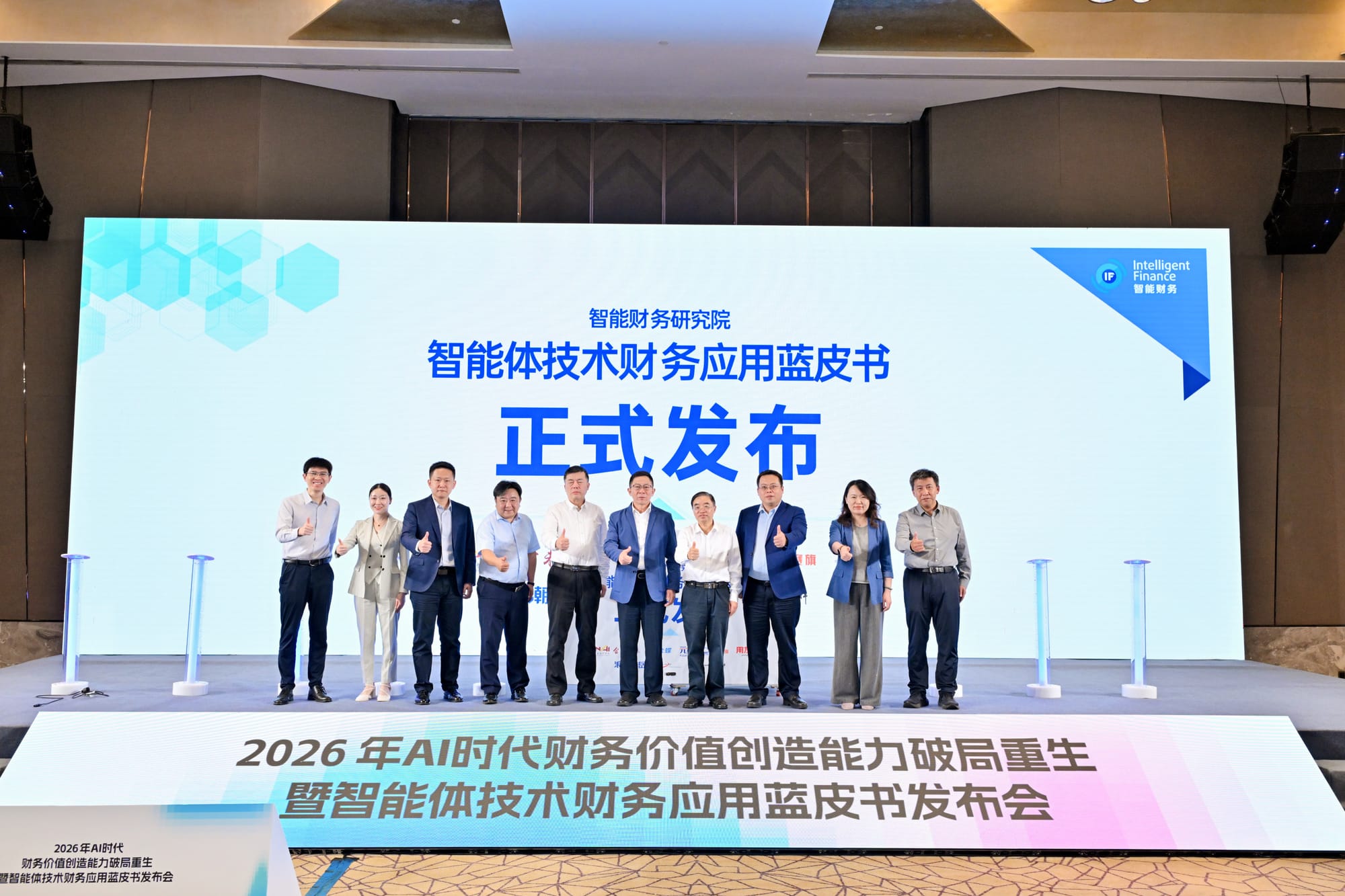
The blue book systematically reviews the overview of agent technology and defines an agent as: a closed-loop artificial intelligence system with a large language model as its core intelligence foundation, integrating perception, memory, reasoning, decision-making, and action capabilities, possessing a complete autonomous decision-making cycle of "perception—planning—action—feedback—correction."
It also proposes that agent-enabled financial applications adopt a four-layer progressive architecture: "technology foundation support—data governance as the foundation—integration of recording and control—scenario application implementation," emphasizing the premise of a verifiable, traceable, auditable, and controllable recording and control system. The book brings together practical insights from industry, academia, and research to provide reference guidance for domestic enterprises advancing the construction of financial agents.
The launch event featured a roundtable dialogue on "Opportunities and Challenges in the Development of Agent Technology in Financial Applications," bringing together representatives from group finance executives, software service providers, and other parties. Li Bo, General Manager of the Solutions Department at i-Search and Academic Member of the Intelligent Finance Research Institute, was invited to participate in the discussion, sharing his views on topics such as the evolution from RPA to agents and the smooth upgrade of existing assets.
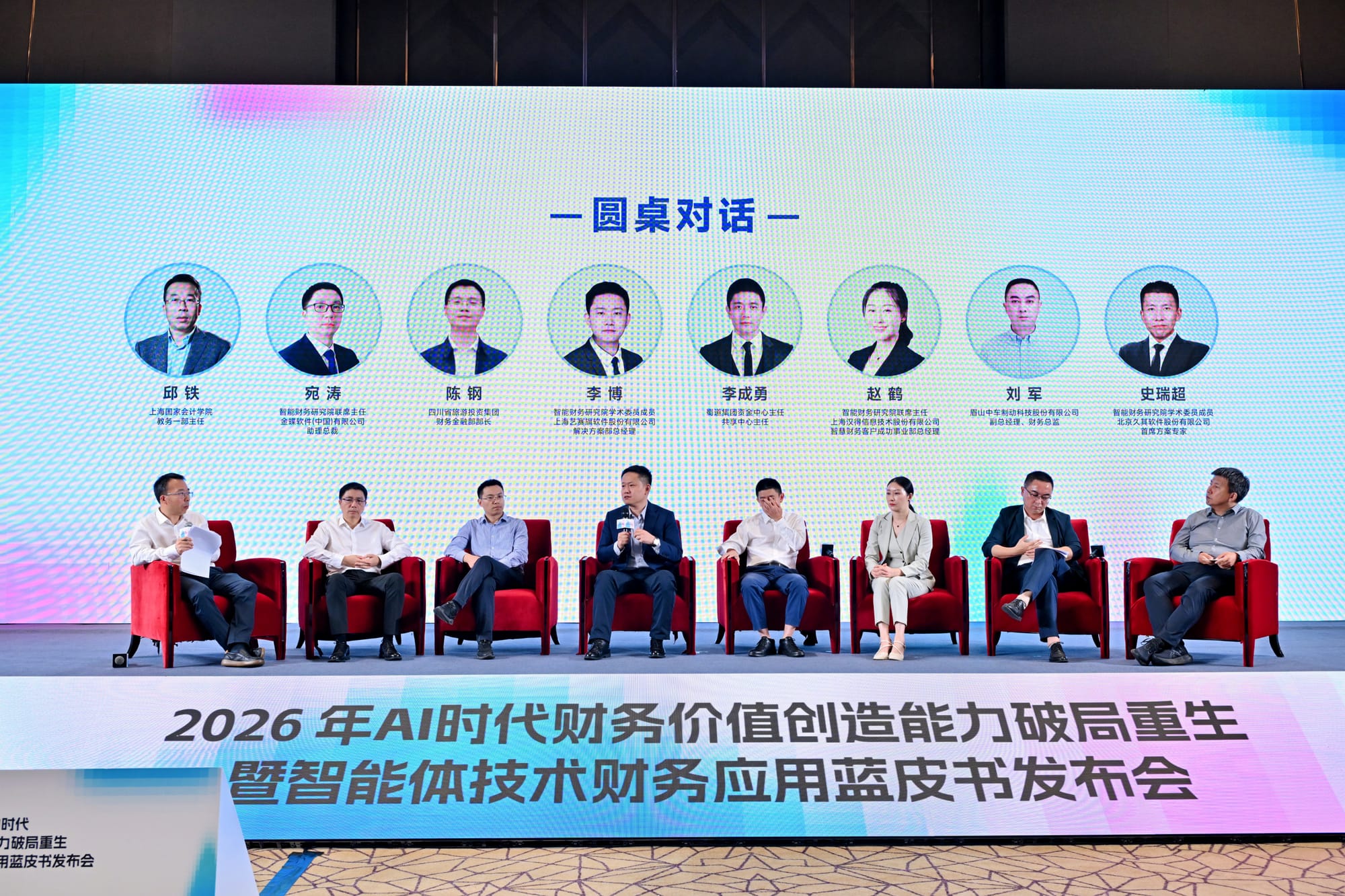
He pointed out that from RPA to agents, the expansion of capability boundaries is reflected in three dimensions:
- The perception boundary has shifted from "recognizing elements" to "understanding content." Agents can process unstructured inputs such as document images and natural language instructions.
- The decision-making boundary has shifted from "humans writing rules" to "model-based judgment." Intent understanding and task decomposition have become programmable objects of automation.
- The adaptation boundary has shifted from "usable only when the environment remains unchanged" to "able to digest when the environment changes." Agents can self-correct when interfaces are revised or processes are slightly adjusted.
These expansions occur during the generation and maintenance phases, while the execution phase still runs along fixed paths without sacrificing determinism. This is the architectural prerequisite for enterprises to confidently deploy agents into production environments.
Regarding why deterministic tasks such as "statement download" still require agents, Li Bo explained: the task is deterministic, but the environment is not. Bank interfaces are frequently revised, and traditional RPA requires repeated development, whereas agents can re-understand and self-repair. Adding a new bank changes from "a development project" to "a single description." For enterprises that have already deployed RPA, execution-layer assets are 100% retained, the connection layer continues to be used, and the intelligence layer is incremental—new requirements are generated using natural language, and existing robots and agents are uniformly scheduled, monitored, and logged on the same platform, achieving a smooth upgrade.
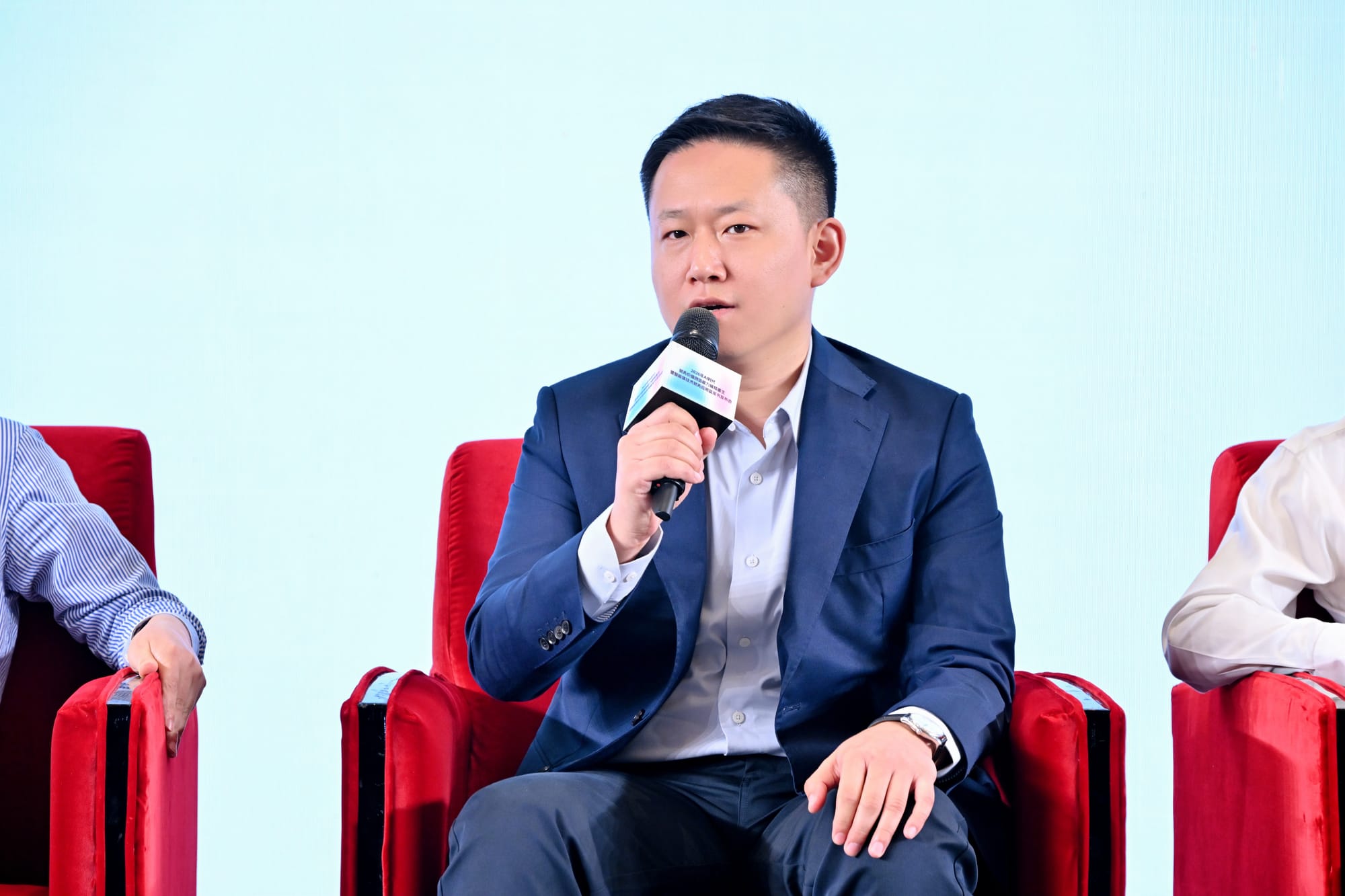
In addition, the roundtable also discussed topics such as data security and trustworthiness, inclusiveness and barriers for SMEs, and human-machine relationships and organizational reshaping. In his remarks, Li Bo mentioned that agents give SMEs an opportunity to "change lanes." Conversational development embeds development capabilities into products, so SMEs do not need to build their own RPA teams. However, they need to address operations and governance to avoid the new dilemma of "being able to build it but not run it stably."
Regarding the future application of agent technology, he offered a prediction: by the end of 2027, finance will become the first department within enterprises to establish an AI internal control system. The transformation of agents in the financial field is not only reflected in efficiency improvements but will also drive the simultaneous iterative improvement of financial institutional systems.
The release of this blue book provides a systematic framework and practical guidance for the application of agent technology in the financial field. As one of the co-authors, i-Search will continue to deepen its work in the field of agentic automation, promoting the financial organization's transition from "process automation" to a new stage of "human-machine collaboration."